
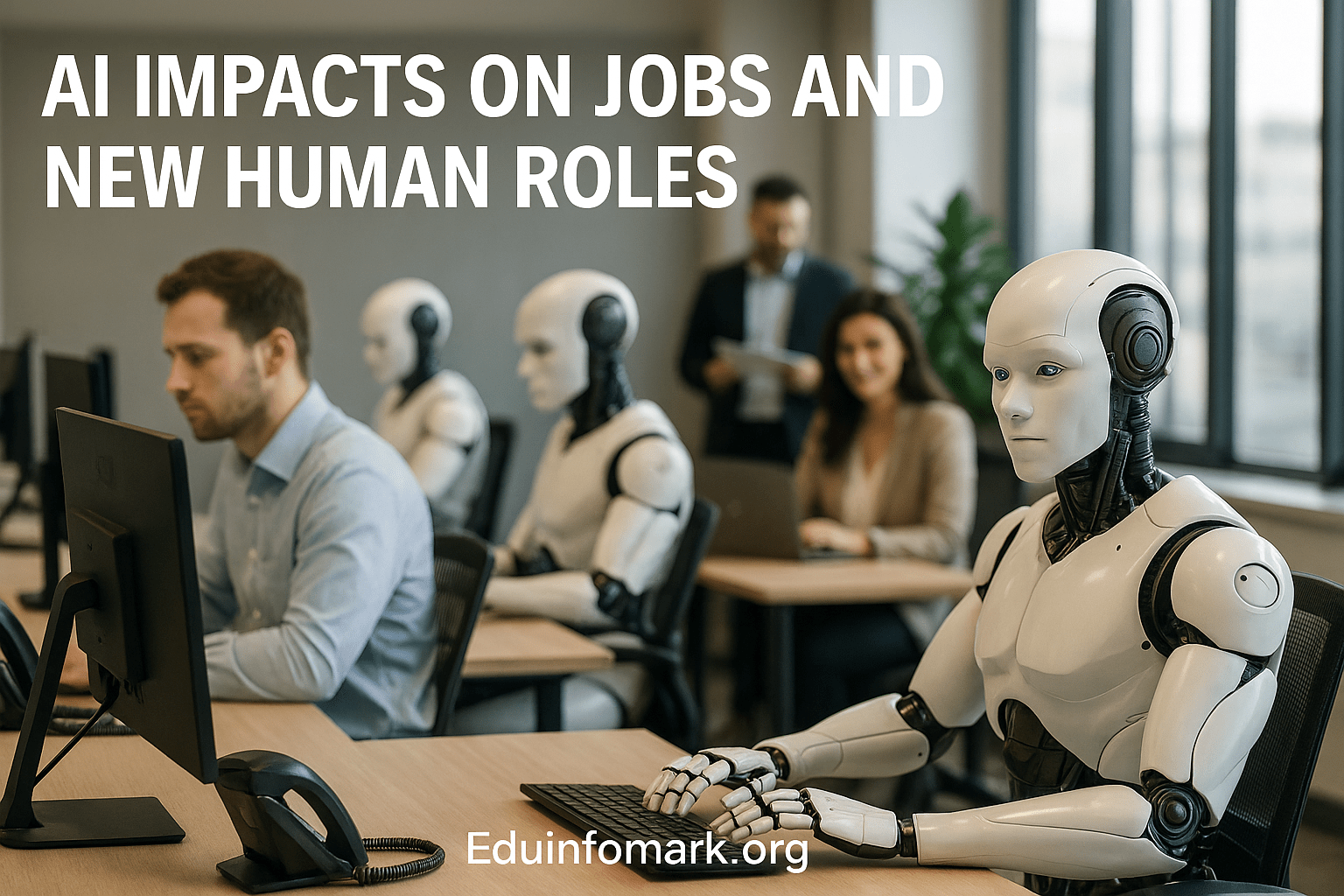
AI is reshaping the workforce, driving significant layoffs across many industries. Routine tasks are increasingly automated, changing the nature of human jobs. However, human skills like creativity, oversight, and strategic thinking remain vital. Adapting to these changes is key to thriving in the AI-driven workplace. Here is a list of companies ranging from Technology, Financial Services (FinTech), Media and Entertainment, Education Technology (EdTech), Government, Telecommunications, Logistics and Transportation, and Energy, and how AI has transformed their operations and workforce roles.
Here are the 15 companies we researched:
Microsoft: Laid off 10,000 employees in early 2023 and an additional 7,000 in 2025 as part of ongoing restructuring and increased investment in AI. The company now uses AI to handle approximately 30% of code generation tasks. However, human roles remain crucial for AI oversight, system design, integration, and tasks requiring nuanced judgment.
Alphabet (Google): Announced the layoff of 12,000 employees in 2023, with further smaller workforce reductions continuing into 2024. AI has taken over significant portions of code generation, customer support, and data analysis. Human employees are still essential for AI model training, ethical oversight, and solving complex problems.
Meta (Facebook): Reduced its workforce by 10,600 in the first half of 2023. The company uses AI extensively for content moderation and customer service. Human roles are focused on AI system development, strategic planning, and the creation of original content.
Visa: Plans to lay off approximately 1,400 employees and contractors by the end of 2024, as AI is increasingly used for payment processing and fraud detection automation. Human workers continue to oversee AI systems, engage in strategic planning, and manage customer relationships.
Mastercard: Has laid off about 1,000 employees, representing roughly 3% of its global workforce. AI is now responsible for many customer service operations and data analysis tasks, while humans focus on AI system development, compliance, and strategic decision-making.
Salesforce: Has let go of over 1,000 employees in 2025, with AI taking on more customer relationship management and data analysis responsibilities. Human staff are still needed for strategic sales planning, developing AI tools, and engaging with customers.
AT&T: Has reduced its workforce by approximately 5,100 in recent years, with AI replacing many customer service and network operations roles. Human roles remain in AI system maintenance, infrastructure development, and customer relationship management.
ExxonMobil: Laid off nearly 400 employees in Texas following a recent acquisition, as AI is now used for data analysis and administrative tasks. Human employees are still needed for research and development, strategic planning, and managing AI systems.
UPS: Has announced plans to cut 20,000 jobs due to automation and AI-driven facility and logistics operations. Human roles persist in AI system maintenance, logistics planning, and customer relationship management.
Klarna: Is experiencing a natural attrition rate of 20% as AI takes over certain tasks, equating to roughly 700 roles. AI now handles many customer service functions, while humans focus on AI supervision, complex customer interactions, and strategic decisions.
BT (British Telecommunications): Plans to cut around 55,000 jobs by 2030, with 10,000 positions expected to be replaced by AI. AI is used for customer service operations and network management, while humans are responsible for overseeing AI systems, maintaining customer relationships, and developing infrastructure.
Electronic Arts (EA): Laid off around 300 employees as part of a restructuring effort. AI is now used for quality assurance testing and some development tasks, while human employees focus on creative direction, storytelling, and complex game design.
The IRS (Internal Revenue Service) has laid off approximately 6,700 employees, with AI now handling data processing and routine administrative tasks. Human workers remain essential for policy analysis, complex auditing, and taxpayer assistance.
Duolingo: Is phasing out contract content creators as AI takes over content generation for educational material and HR support. Human roles now focus on training AI systems, quality assurance, and curriculum development.
Paramount Global has laid off between 800 and 2,000 employees amid restructuring. AI now handles content curation and administrative tasks, while humans continue to drive creative content creation, strategic planning, and AI oversight.
In conclusion
AI is rapidly automating routine and data-driven tasks, but it cannot replace core human qualities like creativity, empathy, and leadership. As roles evolve, employees must focus on skills that set them apart from machines, such as critical thinking and complex problem-solving. Emotional intelligence and the ability to build relationships remain essential in workplaces increasingly shaped by automation. Adaptability and a commitment to lifelong learning are crucial, as technological change accelerates and new tools emerge. Leadership and strategic vision are needed to guide organizations through uncertainty and innovation. Technical proficiency, including AI literacy and digital fluency, is becoming a key differentiator for job seekers. Workers who understand how to collaborate with AI and use it to enhance their productivity will be more resilient to automation. Continuous learning and upskilling are necessary to stay relevant as job requirements shift. Human-AI collaboration, rather than competition, is the path to success in the evolving workplace. Ultimately, those who combine uniquely human skills with technological literacy will thrive in an AI-augmented future.