
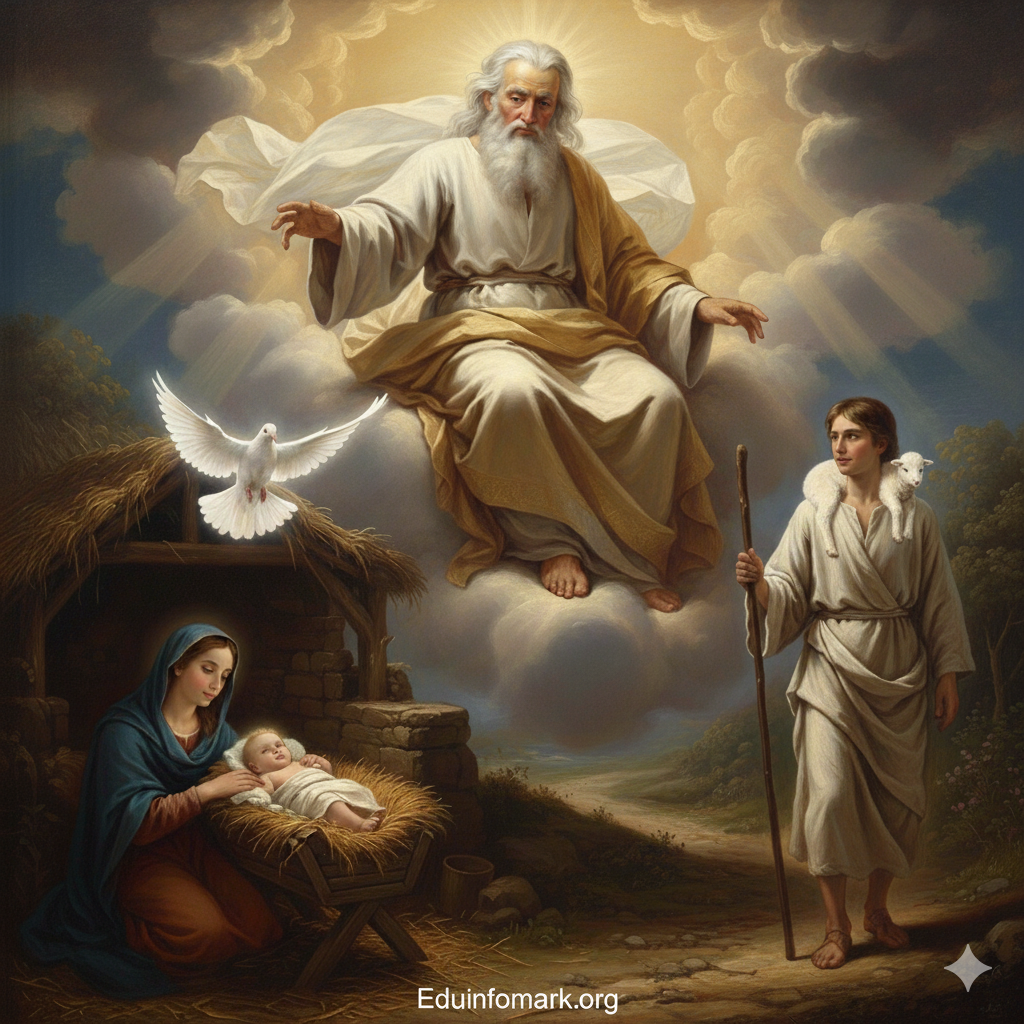
He Came To Heal What was wounded and to Unite What Was divided.
The mystery of the Incarnation is the greatest of all mysteries, because in it the eternal Son of God, without ceasing to be God, truly took our human nature to save and transform it from within. (John 1:14; Hebrews 2:14–17) The Fathers of the Church express this by teaching that what is not assumed is not healed: Christ assumed our mortal, suffering nature in all things but sin, so that humanity might be redeemed at its roots. (Hebrews 4:15; 2 Corinthians 5:21)
From the beginning, this concrete, fleshly reality of the Incarnation was contested, as Gnostic thinkers claimed that matter is evil and that God could not truly take a body. Yet the Church, echoing Scripture, insists that “every spirit which confesses that Jesus Christ has come in the flesh is of God,” because by taking our lowly condition, God sanctified, healed, and raised human nature to the order of grace. (1 John 4:2–3; Philippians 2:6–8)
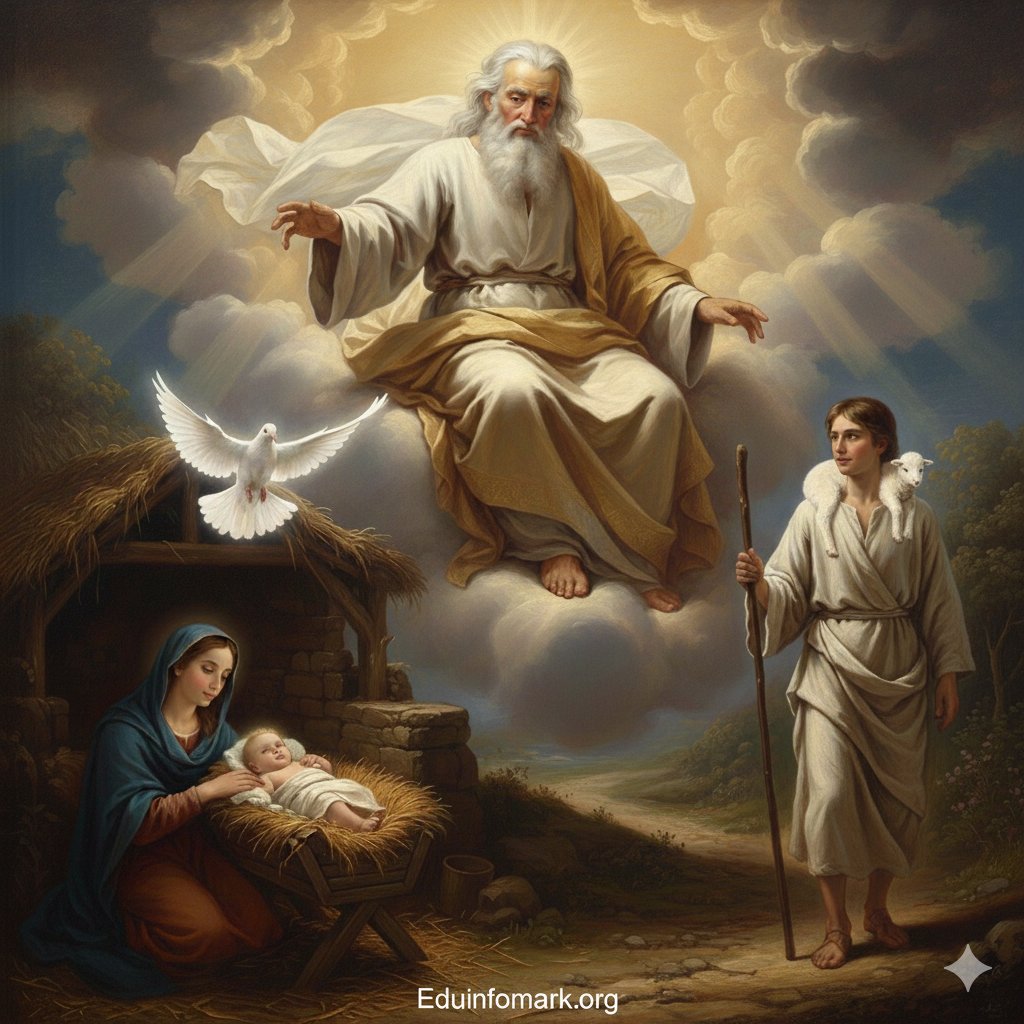
This same misunderstanding of Christ persists in other forms today, when some groups, such as Jehovah’s Witnesses, say that Jesus has a beginning because he was born in time. The Prologue of John answers this directly: “In the beginning was the Word, and the Word was with God, and the Word was God and the Word became flesh,” showing that the Son who entered history at a particular moment existed before all ages, and that through him all things were made. (John 1:1–3, 14; Colossians 1:16–17)
Because this eternal Word truly became man, the Jesus of the New Testament is “Emmanuel, God with us,” the same God who spoke in the Old Testament, now present in our human flesh. (Matthew 1:23; Hebrews 1:1–2) Thus, he can say, “Whoever has seen me has seen the Father,” and Saint Paul calls him “the image of the invisible God,” so the Church confesses him consubstantial with the Father, true God from true God, in whom “the whole fullness of God dwells bodily.” (John 14:9; Colossians 1:15; 2:9)
Because God has come so near to us in Christ, Christians are uniquely blessed: in no other faith is God so profoundly close as in the mystery of God-made-man. (John 1:14) The God who once spoke through the prophets has “in these last days spoken to us by a Son,” who chose to come as a child to enrich us with the treasures of grace. (Hebrews 1:1–2; 2 Corinthians 8:9)
This saving closeness reaches its summit in the Paschal Mystery, where, by his death and resurrection, Christ reconciled us to the Father and made us “heirs of God and fellow heirs with Christ,” sons and daughters in the Son. (Romans 8:14–17) In Him, believers become members of God’s household and sharers in the divine life He came to bring, participating now in what He will reveal in fullness. (Ephesians 2:19; 2 Peter 1:4)
The name “Emmanuel” therefore reveals not only God’s nearness, but its character as compassionate, merciful love: the highest form of human connection is this divine empathy. (Matthew 1:23) Christ could have saved us from afar in sheer power, yet he chose to enter our weakness, “tempted as we are, yet without sin,” to suffer with us and for us so that nothing truly human, except sin, would be foreign to him. (Hebrews 4:15; 1 Peter 2:24)
This pattern of God’s empathetic nearness becomes the model for Christian life, calling believers to draw near to the suffering of others with concrete works of mercy. (John 13:34–35) At Christmas, when the Church contemplates the Child in the manger, it celebrates the supreme gift: “God so loved the world that he gave his only Son,” and so every disciple is invited to become a gift for others. (John 3:16)
In this light, the manger overflows into mission: Christians are sent to bring healing to the sick, food to the hungry, shelter to the homeless, and clothing to those in need, living out the Lord’s own criteria of love. (Matthew 25:35–36; Isaiah 58:7) True worship, then, includes sharing bread with the poor and welcoming the stranger, allowing justice and mercy to continue the story that began in Bethlehem. (Isaiah 58:7; Micah 6:8)
As this mystery unfolds in history, Christmas urges that hatred give way to love, division to reconciliation, and bitterness to words of encouragement and peace, so that the angels’ song, “on earth peace,” may resound in our concrete relationships. (Luke 2:14; Romans 12:18) In a world that now feels like one great neighborhood, Emmanuel assures us that God is present in the midst of our families, friendships, and conflicts, sustaining us in every season. (Matthew 28:20; Lamentations 3:22–23)
To be alive in this moment, held in existence by God’s merciful love, is already a sign that the story of the Incarnation continues in each life touched by grace. (Lamentations 3:22–23) May this awareness fill every greeting, visit, and conversation with love, peace, joy, and encouragement.
Merry Christmas.