
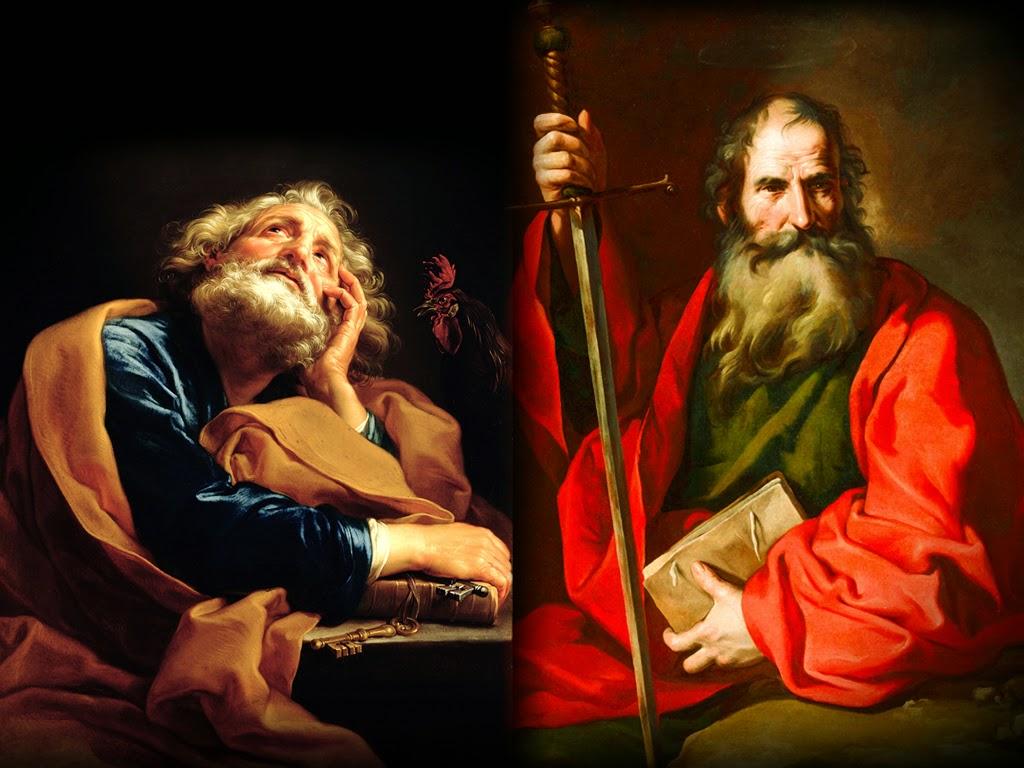
Homily for the Solemnity of Saints Peter and Paul, Apostles, June 29, 2025
“Peter and Paul are often contrasted as two opposites: Peter, the fisherman from Galilee, represents the Church’s institutional dimension, while Paul, the learned Pharisee, embodies her missionary outreach to the Gentiles. Yet both were united in the one Church of Christ, and both gave their lives for the same Lord. Peter, the rock, and Paul, the herald, together form the foundation of the Church’s unity and mission.” — Pope Benedict XVI
Readings During the Day
My Dearest Friends in Christ,
Today, as we celebrate the great Solemnity of Saints Peter and Paul, we are confronted with two extraordinary men whose lives reveal the boundless mercy and transforming power of God. In our first reading from Acts, we hear of Peter’s miraculous deliverance from prison, an event that demonstrates how God intervenes when His people remain faithful. Peter, who once denied Christ three times in fear, is now found sleeping peacefully in prison, bound in chains, yet unshaken in trust. This same Peter, who wept bitterly after his betrayal, was not cast aside by the Lord but was restored and made the rock upon which Christ built His Church. His story teaches us that God does not discard us for our failures; what matters is not our sin but our repentance. Peter’s weakness became the very place where God’s strength was perfected, reminding us that no fall is final when met with contrition.
Paul’s journey, on the other hand, began in violence, zealously defending the traditions of his fathers to the point of persecuting Christians. He truly believed he was serving God by opposing Christ, much like many today who cling to ideologies, prejudices, or systems of power, convinced of their righteousness. But on the road to Damascus, divine light shattered his certainty, and he was given a choice: remain in the old way to save face or embrace the Truth, no matter the cost. Paul chose the latter, proving that it is never too late to abandon error and stand for what is right. His conversion challenges us to examine where we, too, may be resisting grace, whether in personal habits, political loyalties, or social attitudes, and to have the humility to change when confronted with the truth.
Both Peter and Paul were far from perfect, yet God chose them for greatness. Peter, the weak and impulsive fisherman, became the fearless shepherd of Christ’s flock. Paul, the persecutor, became the Apostle to the Gentiles. Their lives show us that God does not call the qualified but qualifies the called. What set them apart was not their perfection, but their willingness to respond to Peter in repentance and Paul in radical conversion. In our second reading, Paul writes to Timothy, “I have fought the good fight, I have finished the race,” words that resonate with all who strive to live faithfully amid trials. Like him, we are called to persevere, not in our strength but in the grace of Christ, who makes all things new.
The Gospel today presents us with Peter’s great confession: “You are the Christ, the Son of the living God.” This moment marks the birth of the Church, built not on human wisdom but on divine revelation. Jesus responds by giving Peter the keys of the Kingdom, a sign of authority that continues in the Church today. Yet this same Peter would later falter, reminding us that even those entrusted with great responsibility remain in need of God’s mercy. The Church, then, is not a society of the perfect but a communion of sinners redeemed by grace, called to uphold truth while extending compassion.
The world today is not so different from the one Peter and Paul faced, a place of conflict, division, and moral confusion. The war between Israel and Iran, the political and economic struggles in our nation, and the countless personal battles people endure all cry out for the hope these two saints embodied. Peter and Paul did not merely preach the Gospel; they lived it to the point of death. Peter was crucified; Paul was beheaded. Their martyrdoms remind us that discipleship is not a matter of convenience but of conviction. To follow Christ means being willing to lose everything for the sake of the Kingdom.
What, then, does this solemnity ask of us? First, it calls us to repentance to turn back to Christ, no matter how far we have strayed. Second, it demands courage, the willingness to abandon what is false, even if it costs us dearly. Third, it requires perseverance to keep running the race, as Paul did, trusting that the Lord stands with us in every trial. Finally, it invites us to hope because if God could use a denier and a persecutor to build His Church, He can certainly use us.
Let us, then, go forth from this celebration with renewed faith. May the prayers of Saints Peter and Paul strengthen us to live with the same boldness, the same humility, and the same unwavering love for Christ. And may we, like them, become living witnesses of the Gospel not in word only, but in the surrender of our lives to the One who alone is the Way, the Truth, and the Life. Amen.
Pray:
- For leaders in Nigeria, the U.S., Israel, Iran, and worldwide, they seek peace over pride.
- For persecutors of the Christian Faith: that, like Paul, they encounter Christ and convert.
- For ourselves: that we embrace the grace to change what must be changed—and the courage to die to sin daily.
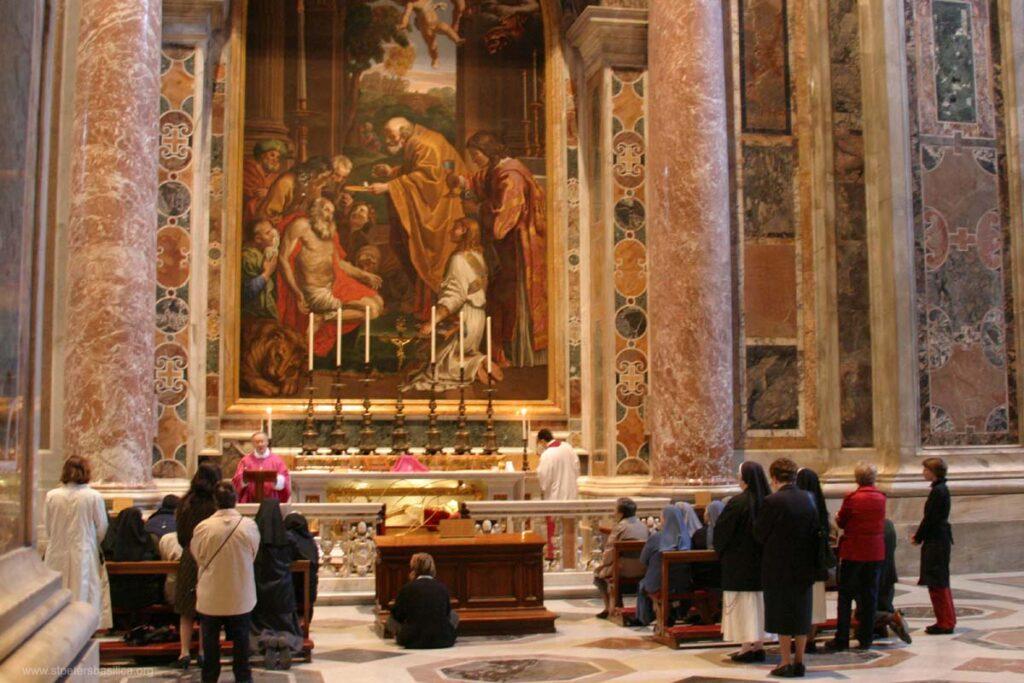
St. Peter and St. Paul
Pray for us! May we imitate your repentance, your conversion, and your holy stubbornness for Christ. Amen.
I keep you and your family always in my prayers. ©Clem C. Aladi (2026)